Opera might be seen by some as old-fashioned and entirely heteronormative. This Pride Month, during which we celebrate love, identity, self-expression and inclusion, we challenge this point of view. The operatic genre has modernised and evolved over time, allowing more LGBTQ+ narratives to come to the forefront. Read on as we share some of our favourite operas which showcase these stories.
Lulu
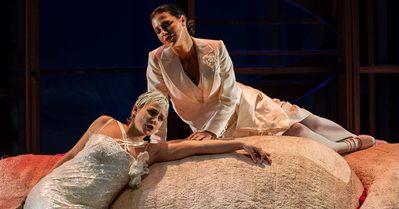
To start at the beginning, Alban Berg’s Lulu, which premiered in June 1937, is arguably the first opera to feature a gay character. Countess Geschwitz is the character in question – a rich, glamorous lesbian woman who becomes one of the femme fatale Lulu’s lovers. Her utter adoration of Lulu is expressed at the end of the opera in the lyrics: ‘Lulu! My angel! ... I will stay near you! Into eternity!’.
Stonewall
More recently, in June 2019, New York City Opera’s Stonewall
premiered, celebrating the 50th Anniversary of the famous Stonewall uprising. This powerful opera was composed by Iain Bell (In Parenthesis) with a libretto by Mark Campbell and was the first to include a transgender character written for a transgender singer. The story features a diverse group of characters who bravely unite to fight back against the police.
Rhondda Rips it Up!
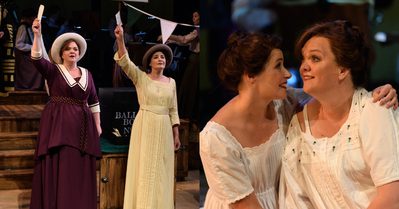
Next is an opera close to WNO’s heart: Rhondda Rips It Up!, an original production which premiered with us in 2018. Composed by Elena Langer with a libretto by Emma Jenkins (Blaze of Glory!), this opera follows the suffragette, activist and entrepreneur, Lady Rhondda, along with a group of fellow suffragettes, during their battle for women’s rights. A key aspect of the narrative is the relationship Lady Rhondda forms with Helen Archdale after her marriage ends.
As One
The chamber opera As One, composed by Laura Kaminsky with a libretto by Mark Campbell and Kimberly Reed, is also important to highlight. It focuses on the complex journey of a transgender woman called Hannah, who is brought to life by both a male singer (‘Hannah Before’) and a female singer (‘Hannah After’). This groundbreaking opera premiered in 2014 and has since experienced great exposure.
Death in Venice
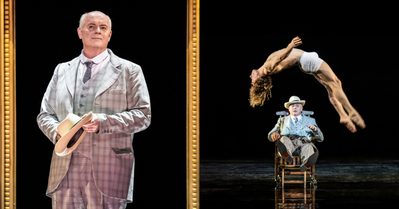
Benjamin Britten’s Death in Venice, which premiered in June 1973, is another example of an older opera featuring a LGBTQ+ story. The plot follows Gustav von Aschenbach, a famous author who has lost his wife, as he travels to Venice for inspiration. He meets a young aristocrat named Tadzio, who is staying in the same hotel with his family, and becomes entranced by his beauty. Most productions interpret his fixation as falling in love, although there is some ambiguity.
Patience and Sarah
Finally, we have Patience and Sarah, created by composer Paula M. Kimper and librettist Wende Persons, and based on the novel by Alma Routsong (under the pen name Isabel Miller). This opera, which premiered in July 1998, is set in Connecticut in 1816 and is about two women of different classes who fall in love and share a dream of going pioneering together. It is commonly considered to be the first lesbian opera, as well as the first mainstream gay-themed opera.
These are just a few examples of operas with LGBTQ+ themes, and we look forward to seeing many more in future. From everyone at Welsh National Opera Cenedlaethol Cymru: Happy Pride Month!